
Scotland road trip with a dog: the Highlands, castles and Isle of Skye
Scotland was one of our favourite trips in Europe with our dog. On this two-week campervan road trip, we travelled through the Highlands, explored the Isle of Skye, visited Edinburgh and discovered numerous castles and lochs. With its wild landscapes, mystical atmosphere and welcoming attitude towards dogs, travelling around Scotland with our dog was both easy and unforgettable.
How to travel to Scotland with a dog via the Channel Tunnel
One of the easiest and most convenient ways to travel to Scotland with a dog is by car on
LeShuttle, which connects France and the UK through the Channel Tunnel.
The journey starts in Calais, where you drive onto a train specially designed to carry vehicles.
The crossing takes around 35 minutes, and you stay in your car with your dog, making the journey comfortable and stress-free.
You arrive directly in Folkestone, in the south of England, ready to continue your trip.
Before boarding, you must go to the Pet Reception, just before French customs, where your dog's travel documents will be checked.
You will need to show your dog's EU pet passport and proof of rabies vaccination and tapeworm treatment administered 24 to 120 hours before departure.
An agent will check the documents and ask you to scan your pet's microchip using a reader provided on site.
There is a small outdoor area nearby where dogs can stretch their legs before the crossing.
Note: tapeworm treatment is required only when entering the UK. If travelling in the opposite direction (England → France), your dog does not need it.
Once these formalities have been completed between France and England, no additional checks are required when travelling from England to Scotland.


Watch our video to get ready for the Channel Tunnel crossing with your dog:
Our two-week Scotland itinerary with our dog
We chose to drive a loop starting in Edinburgh; the different stops are detailed below.
For this trip to Scotland with our dog, we rented a campervan in France.
We set off in early October for two weeks, an ideal time to enjoy the beautiful autumn colours
while avoiding midges, the tiny Scottish biting flies that are especially common from May to September.
Including the return journey through England, we spent around a week and a half in Scotland.

Watch our video to get ready for a road trip around Scotland with your dog:
Visiting Edinburgh with a dog
For our first stop in Scotland, we began by exploring the capital, Edinburgh.
To avoid the hassle of city-centre parking, we chose Ingliston Park & Ride. It is very convenient:
a tram takes you straight into the heart of Edinburgh in just 25 minutes, and dogs can travel on it free of charge.
We got off at Princes Street and began our visit to the historic centre in the gardens of the same name.
We walked through the park to the Ross Fountain, a beautiful work made in France
and first displayed at the Great Exhibition in London in 1862.

From the fountain, you get a first lovely view of Edinburgh Castle, perched on an extinct volcano.
Listen out: a cannon is fired from the castle every day at 1 pm. We walked up to the castle esplanade for a panoramic view over the city.
Dogs are not allowed inside the castle.
Nearby, the large souvenir shop Tartan Weaving Mill and Exhibition welcomes dogs — a great opportunity for a little shopping!
Edinburgh city centre is full of charming little shops, especially along Victoria Street, famous for its colourful façades.
The street is said to have inspired J.K. Rowling's Diagon Alley in Harry Potter.
We were able to visit both shops dedicated to the series with our dog, including the lovely Museum Context.

We continued to St Giles' Cathedral, which welcomes dogs.
Before our visit, we had read an old story said to explain why:
nearly 500 years ago, John Craig, a reformer of the Church of Scotland, escaped execution and survived thanks to an unknown black dog that dropped a purse of gold at his feet.
His friend John Knox then promised that St Giles' would always welcome dogs, in honour of this providential act.
The cathedral's website confirms that dogs are welcome, so we took the opportunity to visit together.
A choir happened to be performing that day!

We then visited the statue of Greyfriars Bobby,
Edinburgh's most famous and faithful dog, whose story is reminiscent of Hachiko in Japan.
Bobby, a Skye Terrier, spent 14 years keeping watch over his owner John Gray's grave. Gray died of tuberculosis in 1858 and was buried in Greyfriars Kirkyard.
Moved by Bobby's story, local residents began bringing him food and looking after him.
When Bobby died, he too was buried in the cemetery, and his statue was unveiled in 1873.
You may notice that Bobby's nose has turned golden because tourists rub it for good luck.
This damages the statue, so we refrained and simply took a photo instead.

Just behind Bobby's statue, you will find the entrance to Greyfriars Kirkyard cemetery,
where dogs on leads are now welcome.
Bobby's grave is often decorated with little sticks left as gifts by visitors.
This is Edinburgh's oldest cemetery, and its beautiful gravestones feature engravings of skeletons and skulls — wonderfully spooky!
As you explore the paths, you may recognise names such as Potter, McGonagall or Thomas Riddle on the gravestones,
as J. K. Rowling used to walk through the cemetery while writing her books.
We then caught the tram back from the same stop to our campervan and set off for the Highlands!

The Kelpies
Our first stop after Edinburgh was the Kelpies,
two enormous 30-metre-high sculptures created by Andy Scott in 2013.
In Scottish folklore, kelpies are water spirits that take the form of horses or women and live in rivers and lochs.
The sculptures honour Falkirk's industrial past and the Clydesdale horses that were essential to it.
There is a car park, shop, café and toilets on site. In the evening, the Kelpies are beautifully illuminated, giving the place a magical atmosphere.

William Wallace Monument
Stirling is an iconic city, famous for the 1297 battle in which William Wallace, a national hero of Scottish resistance,
fought the forces of Edward I.
Although Stirling Castle is a must-see, we skipped it because dogs are not allowed.
Instead, we visited the National Wallace Monument, which stands on a hill overlooking the city in honour of William Wallace.
Dogs are welcome in the Legends at the Monument gift shop by the car park, although not in the café.
It takes around 20 minutes to walk through the forest to the tower.
To reach the top of the National Wallace Monument, you must climb 246 steps.
Exhibitions on each floor tell the story of the Battle of Stirling and its key figures,
offering a fascinating glimpse into Scottish history (watching Braveheart before your trip is a good introduction!).
Dogs are not allowed in the tower, but taking turns makes this easy.
While you wait, enjoy the wonderful view of the city from the top of the hill,
browse the tower's gift shop (where dogs are welcome), or shelter in the small waiting room at the tower entrance if it is cold or raining.


Discovering Loch Lomond with a dog
Loch Lomond was the first loch on our road trip and is Scotland's largest lake.
You can stop at Balloch Castle & Country Park, which sits beside the loch.
We chose to visit the charming village of Luss.
From the large car park, walk through the village to reach the loch and a pleasant beach.
You can also take a boat trip on the lake from Tarbet Pier.

Fall Of Falloch
On our way to Tyndrum, we stopped to see the waterfall at
Fall of Falloch.
From the car park, an easy, straight walk of about ten minutes takes you to the Falls of Falloch, where the river drops 9 metres.
The free car park is quite small, so finding a space may be difficult in high season.

Kilchurn
Kilchurn Castle was our favourite castle of the trip.
To get there, pull off the road at the spot marked here:
Kilchurn Castle Viewpoint and Layby.
You then cross a field (remember to close the gate behind you).
Dogs are allowed but must be kept on a lead, as there are sheep in the field.
You can walk around the castle on the left, alongside a field of Highland cows,
or take the path straight ahead — but be prepared for muddy shoes, as the moorland is boggy!
You will reach the loch shore, with a wonderful view of the 15th-century ruins of Kilchurn Castle.


Exploring Glencoe and the Highlands with a dog
Drive through the Glencoe valley on the A82 between Tyndrum and Glencoe.
We stopped at the following viewpoints:
• Loch Tulla Viewpoint
• Loch Ba Viewpoint
• Rannoch Moor Viewpoint
• Buachaille Etive Mòr Car Park
• Glencoe Viewpoint
• The Meeting of Three Waters
• Three Sisters Viewpoint (our favourite; we walked down from the car park to join the hiking trail)
• Loch Achtriochtan, Glen Coe
We then visited the Glencoe Visitor Centre, which is free and completely dog-friendly.
We watched a short film about the reconstruction of a traditional dwelling before seeing it in person.
Next, we explored the Glencoe Lochan Trail, which has three walks of around 45 minutes each.
We chose the route around the loch, an easy, completely flat walk with pretty boardwalks. Pay for parking using the RingGo app.


Seeing the Glenfinnan Viaduct with a dog
As Harry Potter fans, we could not miss the Jacobite Steam Train crossing the
famous Glenfinnan Viaduct,
made famous by the film series.
Depending on the season, the train crosses once or twice a day; on the day of our visit, only the morning crossing was available.
It leaves Fort William at 10:15 am and crosses the viaduct at around 10:45 am. Check the website before your visit!
There is a large paid car park with a café, dog-friendly shop and toilets at the foot of the viaduct, but it fills up quickly,
so we arrived an hour early.
A 15-minute trail from the far end of the car park leads to a viewpoint with a superb view of the train's arrival.
The wait among the many other fans is rewarded by the magical sight of the train passing with plumes of smoke,
a scene straight out of the Harry Potter universe.


While waiting for the train, we took the time to visit the Glenfinnan Monument opposite the car park, which marks the starting point of the Jacobite rising.
The site also offers a magnificent view of Loch Shiel, used as the filming location for the Triwizard Tournament in the Harry Potter films.
On the way to Mallaig, it is also worth stopping at St. Mary & St. Finnan Church. Harry Potter fans can also visit Eilean na Moine,
the iconic film location used for Dumbledore's grave.

Visiting the Isle of Skye with a dog
The ferry: Mallaig to Armadale
From Glenfinnan, we chose to reach the Isle of Skye by taking the ferry from Mallaig, avoiding several hours of driving.
Dogs are welcome on the ferry, and ours could join us on the upper deck to enjoy the crossing.
The journey takes 35 minutes; it is best to arrive a little early.
We strongly recommend booking in advance, as many travellers have reported being unable to board without a reservation
and having to drive all the way around to reach Skye.

Armadale Castle
Just after getting off the ferry, we visited the grounds of Armadale House, the former seat of Clan MacDonald.
Although the castle is now in ruins and cannot be entered, the remains make a beautiful setting.
The site also has a museum dedicated to Clan MacDonald, which we skipped because dogs are not allowed inside.
The grounds are well kept, and one of the highlights is the wonderful sea view. Our dog particularly enjoyed the lawn and had a good roll around on it!

Old Man of Storr
One of the Isle of Skye's highlights is the hike to the Old Man of Storr, named after its impressive 55-metre-high monolith,
which resembles the silhouette of an old man.
There is a large car park with a small shop and toilets at the trailhead.
The climb is quite steep, so good walking shoes are recommended.
If you are able, continue to Storr Lookout Point for the best panorama on the hike.
The Quiraing hike is another excellent way to explore Skye's spectacular scenery.


Portree
The charming village of Portree, with its harbour and colourful houses, is well worth a visit.
We enjoyed delicious fish and chips at An Talla Mòr Eighteen Twenty, an unusual pub in a converted church.
Dogs are welcome, and a live band was playing during our visit, adding a friendly touch to our meal.
We also browsed the village's tourist shops, where our dog was welcome to come along.

The Fairy Pools
Another lovely walk we did was the Fairy Pools trail, which follows a series of waterfalls with clear water.
We went in the late afternoon to avoid the crowds, as we had read that the area can get quite busy during the day.
The trail starts directly opposite the main car park.
It is an out-and-back walk rather than a loop, and the first section descends quite steeply.


Kilt Rock and Mealt Falls
Close to the Old Man of Storr hike, we made a quick stop to admire Mealt Falls. The autumn colours were especially beautiful, creating a natural spectacle not to be missed.

Eilean Donan Castle
Just beyond the bridge off the Isle of Skye stands Eilean Donan, a must-see castle and a picture-perfect Scottish Highland landmark.
Set on a small island connected to the mainland by a stone bridge,
the fortress was restored a century ago after being destroyed during the 1719 Jacobite rising.
Eilean Donan is also famous for its appearance in Russell Mulcahy's film Highlander.
Dogs are not allowed inside the castle, shop or café, so we took turns visiting.
The rooms are beautifully furnished, and the lit fireplaces create a cosy atmosphere. We recommend a visit!
We were still able to cross the bridge and walk around the island with our dog (you need a ticket to cross the bridge).


NC500
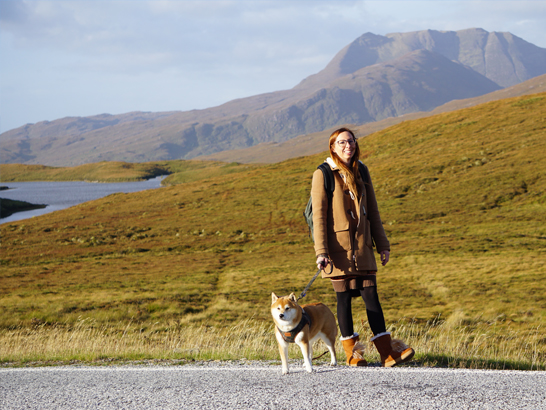
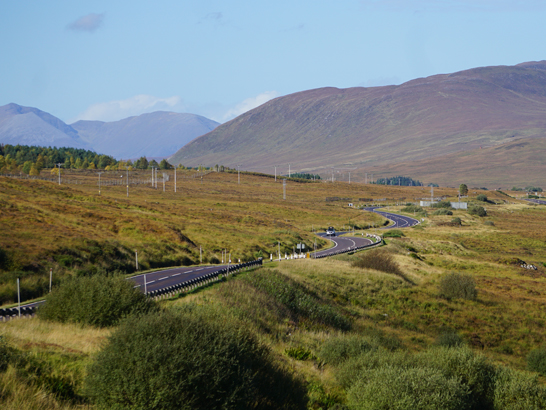
The stretch of the North Coast 500 between Ullapool and Durness was one of the most beautiful drives we
took in Scotland.
The scenery alternates between mountains, lochs and winding roads through wild landscapes.
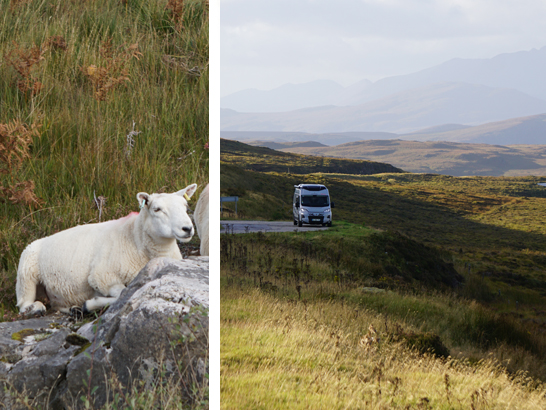
You will also come across many sheep roaming freely beside the road,
so take your time, drive slowly and stay alert.
You will also drive on several single-track roads, typical of the Highlands.
If you are travelling by campervan, do not worry: passing places let vehicles pass and pull over for one another.
Scottish drivers are very courteous, which makes the drive much more enjoyable.
This is an ideal stretch for taking your time and making plenty of stops with your dog.
Ullapool
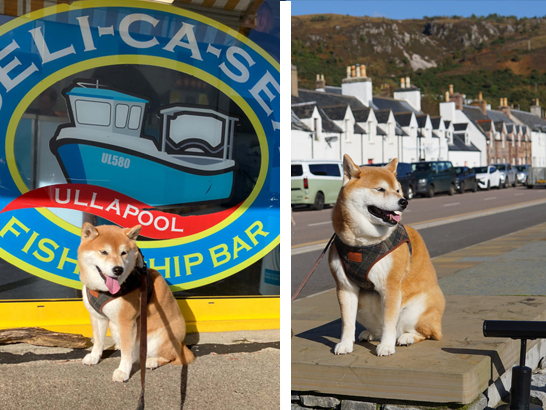
We started in Ullapool, a pleasant little harbour where we enjoyed some good fish and chips by the sea before setting off again.
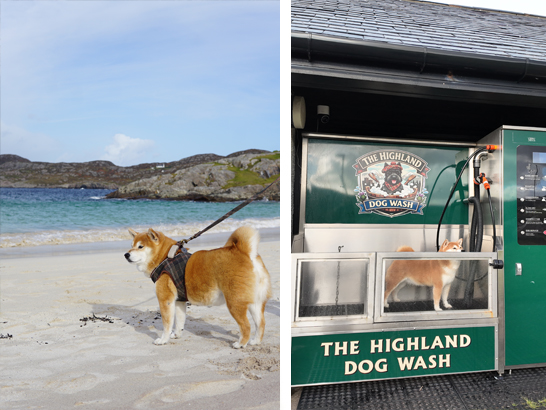
Next stop: Achmelvich Bay, a beach well worth visiting for its pale sand
and almost tropical-coloured water, a surprising contrast to the Highland scenery.
We saw lots of dogs enjoying the beach and running around, just like Meiko.
It is a perfect place for a break!
Ardvreck Castle
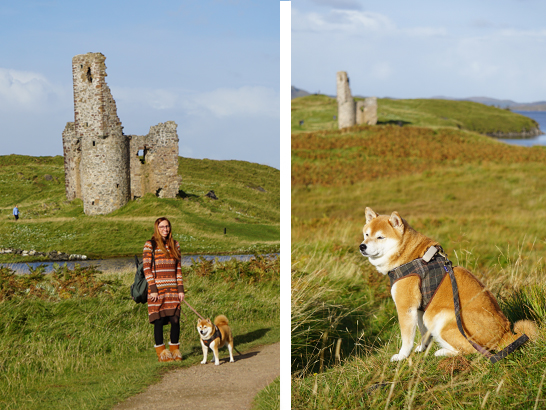
A little further on, we stopped at Ardvreck Castle,
whose ruins stand on the shore of Loch Assynt.
The setting is beautiful, with the Highlands in the background and the loch surrounding the castle.
Entry is free, so you can get close to the ruins and enjoy the scenery with your dog.
It is also a lovely spot for taking photos.
Durness
We particularly loved Durness, with its long pale-sand beach,
turquoise water and wild scenery in the north of Scotland.
We stayed at Sango Sands Oasis, a fantastic campsite
just above the beach.
Being able to step out of the van and reach the beach in just a few minutes was wonderful!
After enjoying the sand and sea, we also found a very handy place:
Highland Wash Dog, a dog-washing station where we could rinse
Meiko before getting back into the van.
A real bonus at the end of the day, so we did not end up with sand everywhere!
Smoo Cave
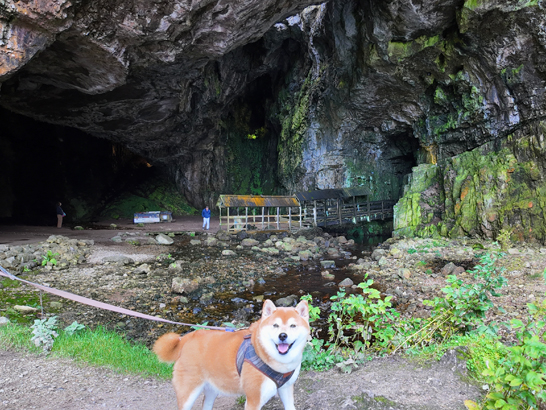
From the campsite in Durness, we took a short walk to Smoo Cave,
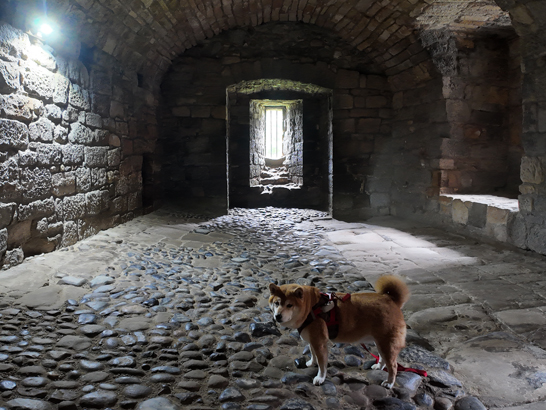
an impressive natural cave whose entrance is reached via a stepped path.
The first part of the cave is free to visit. Inside, you can also see a small chamber where a waterfall flows in.
Dogs can accompany you in this section, which is accessible on foot,
but are not allowed on the guided boat tours that go further inside.
Discovering Loch Ness with a dog
Although opinions on Loch Ness are sometimes mixed, we wanted to make up our own minds about this iconic Scottish destination.
Like everyone else, we hoped to catch a glimpse of "Nessie", the world-famous Loch Ness Monster, a legendary creature said to live in the Scottish loch.
We began our visit in the charming historic village of Fort Augustus, which is crossed by the Caledonian Canal.
Built in the 19th century, the canal connects eastern and western Scotland, allowing boats to avoid
the long route around the coastline. Around the locks, you will find restaurants and souvenir shops,
and Nessie is everywhere: in topiary sculptures, on signs and in the many gift shops.
A short walk will also take you to the
Loch Ness Viewpoint, where you can get your first glimpse of the loch.

We then continued along the shores of Loch Ness.
It may not be Scotland's most beautiful loch,
but we enjoyed scanning the water for Nessie.
The village of Drumnadrochit is home to the Loch Ness Centre (not accessible to dogs and only in English), more tourist shops
and the ruins of Urquhart Castle, which are also off-limits to pets.
You can take a cruise on the loch with your dog if you book in advance with Loch Ness by Jacobite; boarding is at Clansman Harbour.

Culloden Battlefield
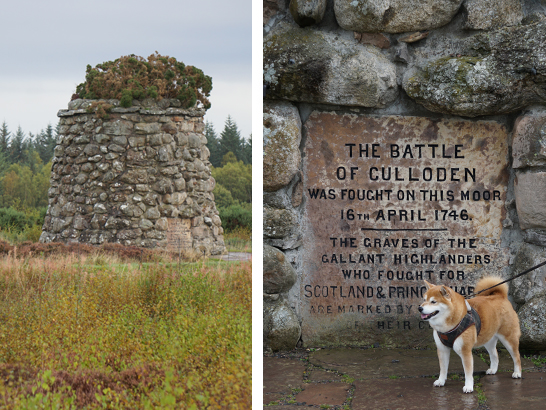
You can visit Culloden Battlefield freely and for free with your dog,
although dogs are not allowed in the museum.
The Battle of Culloden took place here on 16 April 1746. It was the final major battle of the 1745 Jacobite rising,
fought between the supporters of Charles Edward Stuart and the British government army.
The Jacobites' defeat in less than an hour marked the end of their attempt to restore the
Stuart dynasty to the throne.
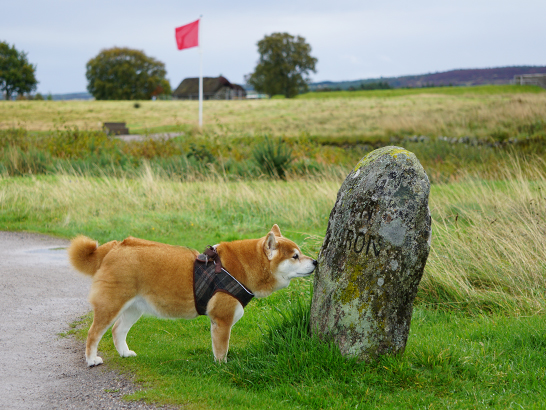
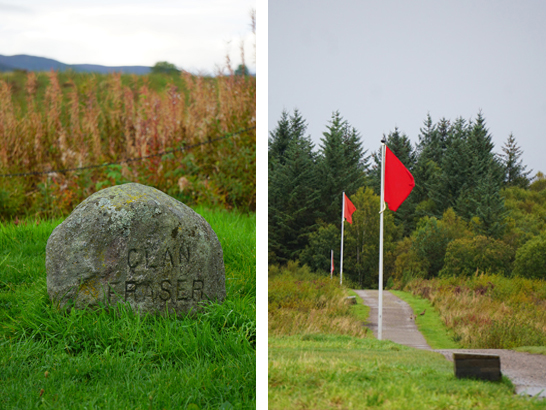
As you explore the site with your dog, you can see the front lines of both armies, marked by flags,
and the memorial stones dedicated to the different Scottish clans who fought here.
This moving outdoor visit offers a better understanding of a major episode in Scottish history.
Dunnottar Castle
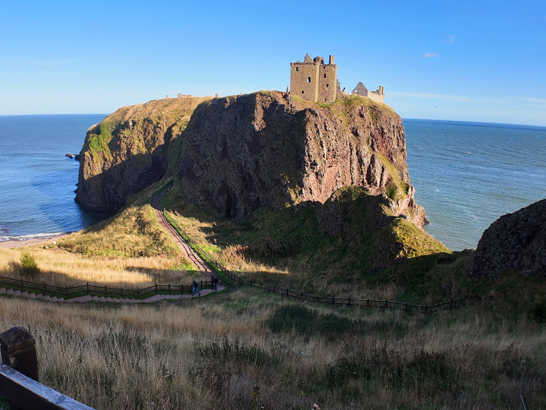
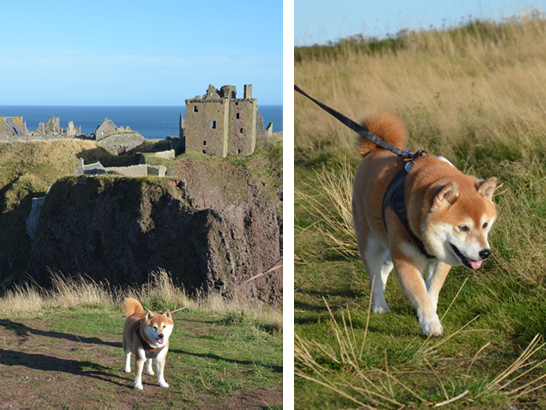
Dunnottar Castle is undoubtedly one of the most beautiful castles we visited in Scotland.
Perched on a rocky headland overlooking the North Sea, its ruins make a spectacular setting.
They are reached by a coastal path followed by a staircase with many steps.
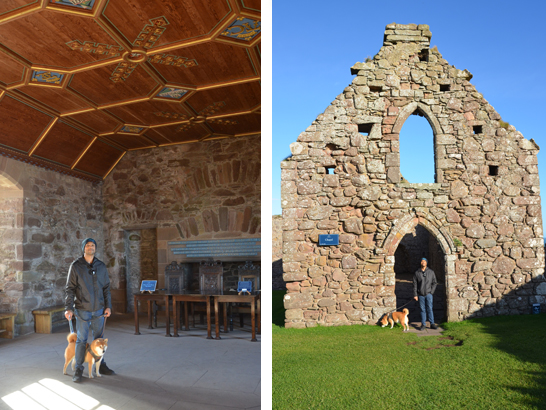
As you explore the remains of the fortress, you will discover a place steeped in history:
in the 17th century, the castle sheltered the Scottish Crown Jewels to protect them
from Oliver Cromwell's troops.
With its cliffs, ruins and breathtaking sea views, this visit left a lasting impression on us and comes highly recommended.
Dogs are allowed throughout the site, provided they are kept on a lead.
Highland Folk Museum
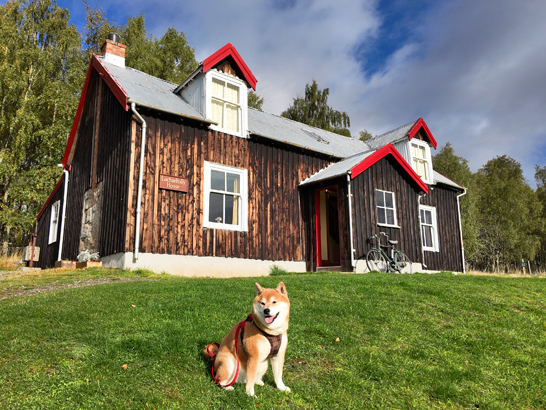
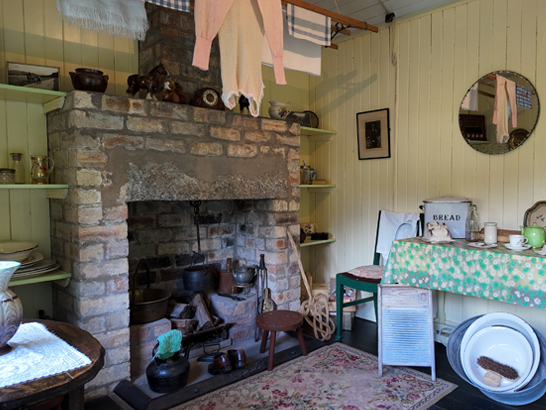
Located in the Cairngorms, the Highland Folk Museum is an open-air museum
dedicated to life in the Highlands through the ages.
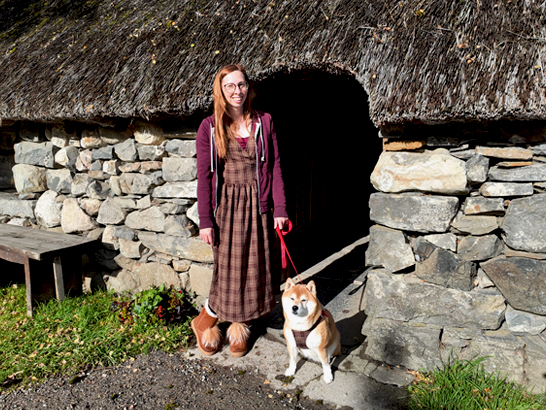
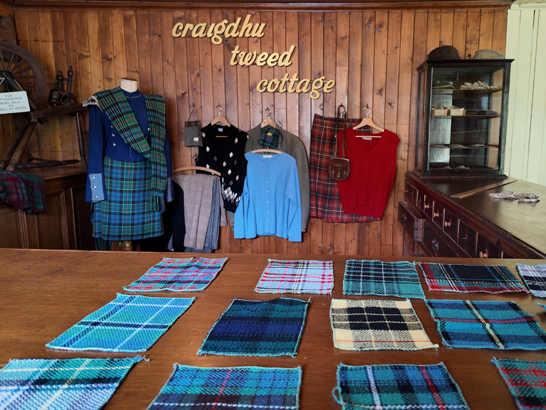
It features 35 buildings recreating life from 1700 to 1950, including a school,
a traditional farm, shops and old homes.
A walk around the museum offers a glimpse into everyday life through the years.
You may also spot a few Highland cows!
It is a pleasant place to stop on your journey; allow a few hours if you want to see everything.
However, we have visited other open-air museums that were larger and livelier.
Good news for those travelling with a dog: dogs, previously prohibited, are now allowed on leads.
They are not permitted in the shop, café or inside the buildings.
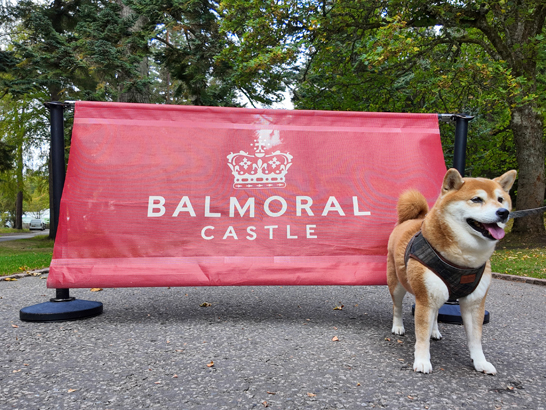
Balmoral Castle
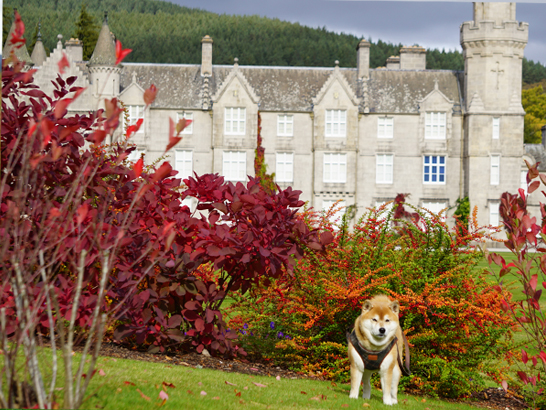
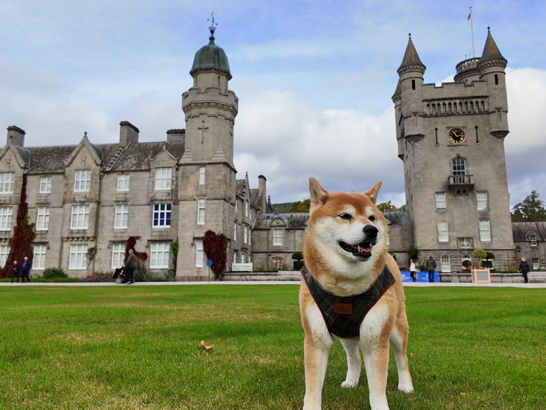
Balmoral Castle is the British royal family's private residence in Scotland.
Construction began in 1853 at the request of Prince Albert and Queen Victoria,
and it has since become an iconic royal residence.
Queen Elizabeth II was particularly fond of the castle and enjoyed staying there.
The castle is not open every day of the year, as the royal family still visits.
Check the dates and opening hours on the official website before your visit.
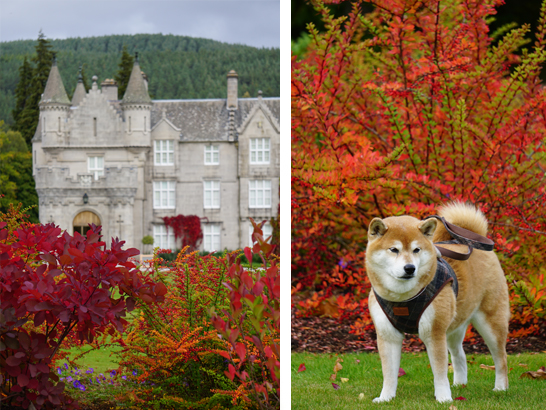
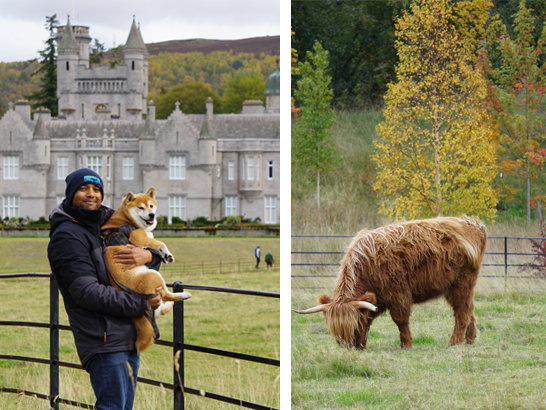
Although the castle is relatively modern, we thought it was magnificent!
It was one of our favourite places on our Scotland trip.
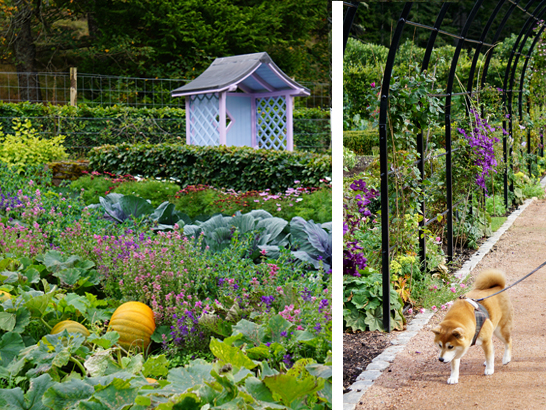
The estate is beautiful, with extensive grounds, forests and vegetable gardens
that are a pleasure to explore, filled with both flowers and vegetables.
In front of the castle, you may also see a field where Highland cows graze.
The good news is that you can visit with your dog!
Meiko was able to join us on a lead in the park and gardens.
You can also visit the ballroom, which contains an exhibition of photographs
and a few objects.
Dogs are allowed in the ballroom if carried.
As there is only one room to visit, I was able to carry Meiko without a problem;
if your dog is too heavy, you can take turns!
Dogs are also allowed inside the café, but not in the shop.
Blair Castle
Blair Castle, built in the 13th century near the village of Pitlochry, stands out from other typically Scottish castles with its elegant white façade.
Although dogs are not allowed inside, the castle, which belongs to Clan Murray, is surrounded by beautiful gardens and a lovely park
for a walk with your dog.
We also spotted deer in the enclosure close to the castle.
Every hour, a bagpiper performs in the castle courtyard for 15 minutes.
If you take turns to visit the interior, prepare to explore nearly thirty rooms,
including an impressive armoury at the entrance. The displays tell the story of the castle and the people who lived there over the centuries.


The Hermitage woodland with a dog
Located in Dunkeld, The Hermitage is one of the most beautiful woodlands we discovered,
with autumn colours adding a magical touch to the atmosphere.
From the car park, a short walk along wooded paths takes you to Ossian’s Hall,
a small building with a wonderful view of the waterfalls.
We stayed overnight at Inver Mill Farm Caravan Park,
close to The Hermitage, which meant we could avoid the often-busy car park and walk there instead.
We even returned at sunrise to enjoy the peaceful setting.


Falkland
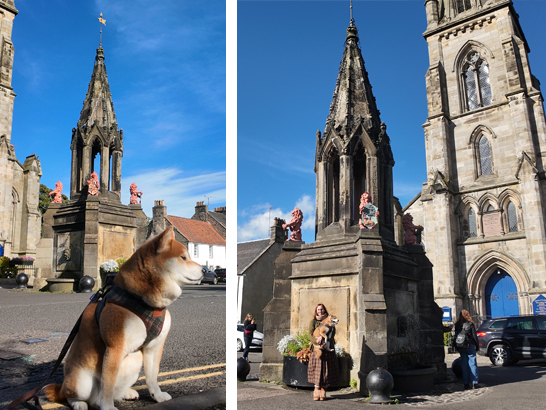
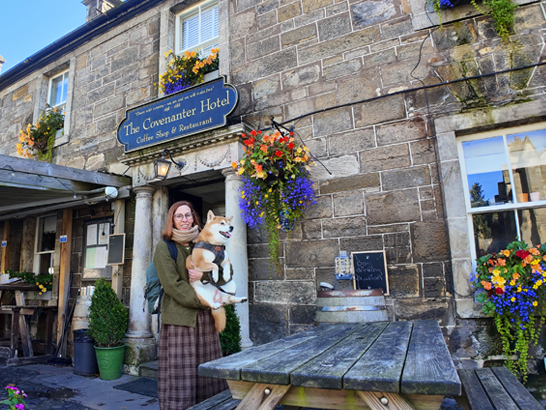
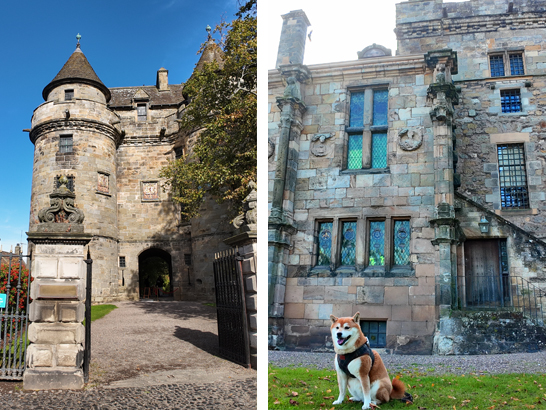
The small village of Falkland is a lovely stop for fans of the Outlander series.
You can see the Bruce Fountain in the village square,
which appears in the series as 1940s Inverness.
We also visited the gardens of Falkland Palace, which are worth seeing,
although we found the admission price a little high.
If you are visiting with your dog, note that dogs are not allowed inside the palace,
but may visit the grounds and gardens.
Midhope Castle
For fans of Outlander, a visit to Midhope Castle, near Edinburgh, is a must. Known as Lallybroch in the series, the castle offers a special treat for fans. A few behind-the-scenes photos are displayed at the entrance, adding to the immersive experience. A short visit is enough, as the main attraction is a quick walk around the outside to take some lovely photos.

Linlithgow Palace
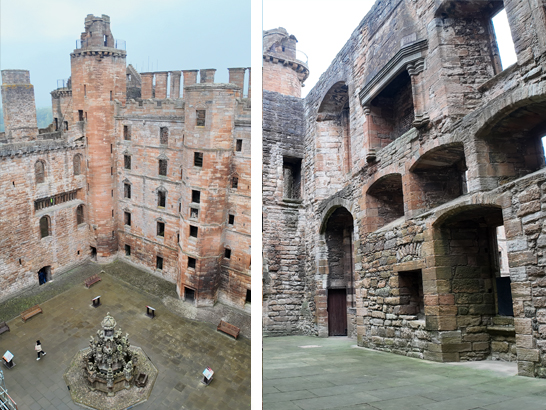
Linlithgow Palace is a former Scottish royal residence,
best known as the birthplace of Mary, Queen of Scots, in 1542.
With your dog on a lead, you can explore the palace rooms,
climb the floors and ascend a tall tower for views of the surrounding area.
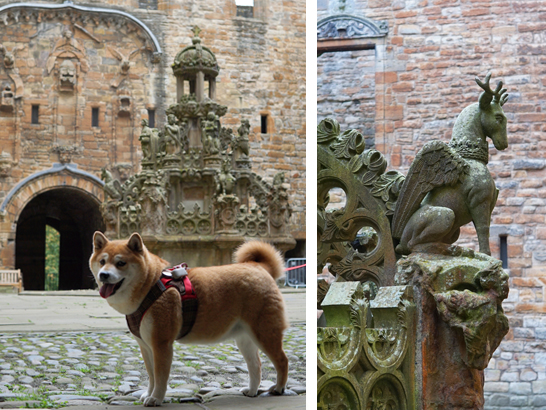
In the courtyard, do not miss the magnificent Renaissance fountain,
built in 1537 by James V of Scotland and decorated with sculptures.
It reflects the palace's prestige during the Stuart era.
You can also see the remains of the royal chapel.
Outlander fans may also recognise the palace, which was used as Wentworth Prison in the first season, where Jamie Fraser is imprisoned.
The palace is in a pleasant setting beside a loch,
so round off your visit with a walk with your dog in the surrounding park.
• RingGo (to pay for parking),
• Met Office Weather Forecast (for the weather),
• AuroraWatch UK (to check for the Northern Lights),
• Park4night (if travelling by campervan or motorhome),
• AllTrails (for hiking),
• My LeShuttle (for the Channel Tunnel crossing)
What to pack for a trip to Scotland with your dog
A few accessories can make walks in the Highlands much easier and help you enjoy your holiday in Scotland with your dog. Here are some essentials we always take with us when travelling.
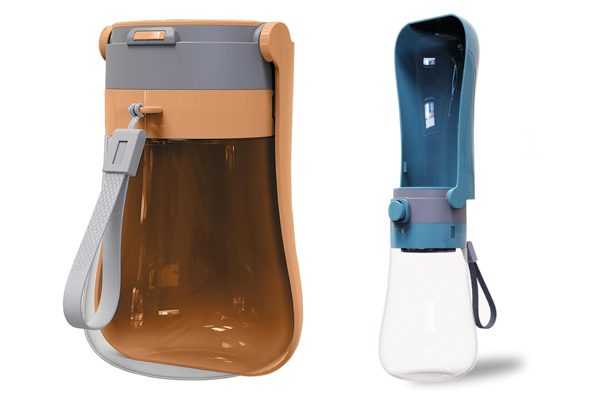
Travel water bottle
Keep your dog hydrated on walks. Practical, leak-proof and always close at hand.
Discover the product
Foldable bowl
Folds in seconds and fits in a bag. Perfect for meal breaks while travelling.
Discover the product
GPS tracker
Track your dog in real time and enjoy peace of mind on your walks (subscription required).
Discover the product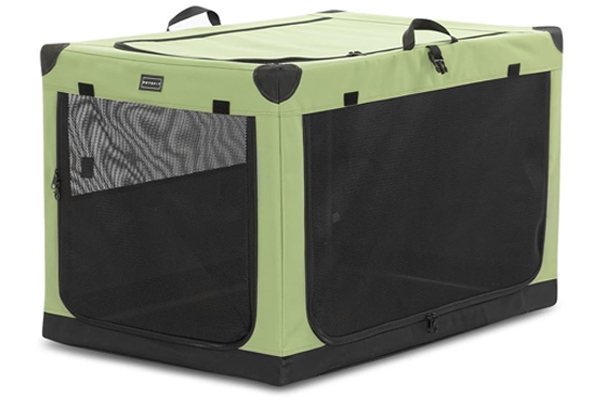
Travel crate
Travel safely by car with a comfortable, secure space for your dog.
Discover the product Follow us!
Explore more
The Hauts-de-France guide is currently available in French.


