Switzerland with a dog: lakes, hikes and dog-friendly places to stay
A trip through Switzerland with your dog is an unforgettable experience. Whether you are admiring the turquoise waters of Blausee, hiking to Oeschinen Lake, discovering medieval Gruyères or taking in the spectacular views around Zermatt and Saas-Fee, Switzerland is a particularly dog-friendly destination. After several road trips through the Swiss Alps, we are sharing our favourite places to visit with your dog, as well as places to stay that we have tried ourselves and practical tips for planning your trip.
Blausee with a dog: the Blue Lake in the Bernese Oberland
Blausee is in the Bernese Oberland. Its name means “Blue Lake”, and it is one of the most magical lakes we have visited in Switzerland.
We have visited at different times of year, and it is still one of our favourite places!
With its turquoise water and surrounding woodland, this place is simply magical. A short trail circles the lake, where you can spot trout in the crystal-clear water.
Swimming is not allowed.
The lake is not very large, but it is easy to reach: it is about a five-minute walk from the car park.
There is also a small souvenir shop, picnic tables, a restaurant and a hotel with a spa.


Oeschinen Lake with a dog: a hike to an alpine lake
The beautiful Oeschinen Lake is just 20 minutes from Blausee.
There are two ways to get there:
• take the cable car up (8 minutes), then walk downhill (20 minutes),
• or hike up on foot (1.5 hours from the car park).
At the top, you are rewarded with a breathtaking view of the lake, surrounded by mountains and dazzling colours.
Off-season, we almost had the lake to ourselves. In peak season, it is best to arrive early.


Interlaken: between Lakes Thun and Brienz
Interlaken lies between the beautiful Lakes Thun and Brienz and is a popular holiday destination.
Thanks to its central location, Interlaken is an ideal base for exploring the region.
We spent a night at the beautiful
5-star Grand Hotel Victoria-Jungfrau. Dogs are welcome and are greeted with a small packet of dog treats.
Built in 1866, the hotel has a 5,000 m² spa with indoor and outdoor pools.
After a long hike, you can comfortably leave your dog in the room while you enjoy the spa.
The breakfast is fantastic too! (Prices have risen considerably since our visit, so book as early as possible to get a better rate.)


Brienz: village and Lake Brienz
At the end of Lake Brienz lies the charming village of Brienz, with its quintessential Swiss chalets adorned with flowers.
A short lakeside path passes beautiful villas.
Brienz is known for woodcarving and is home to a school and a woodcarving museum.
Above Brienz, we visited the small Alpine Wildlife Park, which you can enter for free with your dog on a lead.
The park was created to give sculptors animal models for their sculptures.
From here, you get a wonderful view of the lake.


St. Beatus Caves with a dog
Dogs on a lead are allowed in the St. Beatus Caves.
A short path leads to the cave entrance, passing a lovely waterfall and ending at an old monastery built into the cliff. The view of Lake Thun from here is wonderful.
Allow about an hour to explore the caves at your own pace. They extend for over a kilometre and are well lit and signposted.
Inside, you will see stalactites, stalagmites and underground lakes.
Bring a jumper, as it can be quite chilly in the caves.


Thun: old town and lake
On our way to Interlaken, we stopped briefly in Thun, at the end of the lake of the same name.
There we discovered the Aare and two lovely wooden bridges, Untere Schleuse and Old Bridge, which, like those in Lucerne, date back to the 18th century.
Riverside paths along the Aare make for a lovely walk, with views of Thun Castle high above the town.
From Rathausplatz in the heart of the old town, stroll along the shopping street Obere Hauptgasse, known for its unusually raised pavements.
We spent a night at the hotel
Schützen Steffisburg . It is just outside the town centre, but was very comfortable!


Männlichen with a dog: Alpine panoramas
Männlichen can be reached by cable car from Grindelwald or Wengen and offers some lovely walks.
We took the cable car from Grindelwald; dogs are allowed on board.
There is a nice playground and a café at the summit station.
We then chose the Royal Walk, which leads to the summit of Männlichen.
Warning: the climb is very steep, but well worth the effort!
The crown-shaped viewing platform offers 360-degree views over the valley.
The round trip from the cable car station takes less than an hour.


Mürren with a dog: an Alpine village
At 1,638 metres above sea level, Mürren is the highest village in the canton of Bern.
To get there, first take the cable car from Lauterbrunnen, then a small train that drops you at the entrance to Mürren.
After exploring the village, instead of taking the train back, we walked along the railway line to the cable car station—a lovely hike.
Back in Lauterbrunnen, do not miss the much-photographed 300-metre-high Staubbach Falls.


Lucerne with a dog: medieval bridges and the Lion Monument
Lucerne is well worth a stop to see its covered medieval wooden bridges, including the Chapel Bridge, built in 1333, and the Spreuer Bridge.
Then take turns visiting the Church of St. Leodegar and the Jesuit Church, a true Baroque masterpiece, while someone stays with the dog.
Another must-see is the Lion Monument in Lucerne, carved into a rock face in memory of the Swiss Guards who fell in service to Louis XVI. Dogs are not allowed in the park,
but as the lion is right by the entrance, you can still take a quick look.


Bern with a dog: UNESCO World Heritage and capital city
As Switzerland's capital, Bern charms visitors with its relaxed atmosphere and UNESCO-listed old town.
It is an ideal city to explore with a dog, as every street has its own character.
We particularly loved the old town, with its famous 13th-century astronomical clock tower (Zytglogge), colourful fountains and broad, arcaded streets lined with elegant shops and cosy cafés.
The exceptionally well-preserved medieval architecture gives Bern a unique atmosphere that is both historic and lively.
The bear has been the city's emblem since 1191 and is everywhere in Bern. The bears used to live in the Bärengraben (Bear Pit),
today, they have a large, landscaped and much more natural enclosure at BärenPark on the banks of the Aare.
It is a lovely link to the history and identity of the Swiss capital.


Basel with a dog: old town and cathedral
Basel lies on the border with France and Germany and is well worth a visit on a trip to Switzerland.
Rich in history and architecture, the city charms visitors with its picturesque, beautifully preserved old town, which is wonderful to explore on foot.
Start your visit at Marktplatz, the lively central square with its colourful market and magnificent town hall (Rathaus),
easily recognised by its red façade decorated with frescoes and gilding.
The courtyard, with its painted arcades and finely detailed sculptures, is free to visit.
From there, cobbled shopping streets wind through the old town to the majestic Basel Minster (Basler Münster), built from pink sandstone and crowned with elegant Gothic towers.
Behind the Minster, do not miss the Pfalz terrace: the viewpoint offers wonderful views of the Rhine,
the city's rooftops and, in the distance, the hills of Germany's Black Forest.


Rhine Falls with a dog: a spectacular day out
The Rhine Falls (Rheinfall), near Schaffhausen in northern Switzerland, are among the country's most spectacular natural sights.
At 150 metres wide and 23 metres high, they are among the most powerful waterfalls in Europe.
Several paths on both sides of the river offer breathtaking views:
• On the Schloss Laufen side, you can walk down to the viewing platforms and experience the thundering water up close. Admission is charged for people, but dogs enter free. Take the panoramic lift or walk down.
• The Neuhausen side is quieter: walking paths offer lovely views of the falls, and some terraces welcome visitors with dogs.

Several operators offer boat trips on which dogs can travel without a muzzle.
Only “Rock Trip No. 1”, which stops at the rock in the middle of the falls, does not allow animals.
Dogs on a lead are allowed on the other trips:
• River crossing No. 2 (5 minutes – 6 CHF)
• Short round trip No. 4 (15 minutes – 10,50 CHF)
• Audio guide No. 5 (30 minutes – 14 CHF)
It is a unique experience to feel the spray on your skin (and your dog's nose!) as you approach the falls.
The Rhine Falls are a must-see and a wonderful place to visit with a dog—we highly recommend it!


Appenzell with a dog: a traditional village
We also visited the small village of Appenzell with our dog.
It is like a living postcard in the heart of the Swiss Alps.
The car-free lanes and traditional hand-painted façades tell stories of the canton’s history and legends.
Every building is painted in vivid colours and decorated with detailed motifs, often depicting local life or family crests.
Between photos, be sure to take a delicious break for the famous Appenzeller Biberli—
small honey-and-almond-filled cakes sold in every bakery.
If you would like to stay in Appenzell, here are two dog-friendly hotels with beautiful, colourful façades:
• Hotel Appenzell
• Hotel Säntis


Just a few minutes from Appenzell, the Ebenalp cable car takes you and your dog effortlessly to over 1,600 metres; dogs can ride in the gondola without a muzzle.
At the top, the views over the Appenzell valley and the peaks of the Alpstein are simply spectacular.
From the top station, you have two options:
• If you walk down, follow a fairly easy scenic trail to the famous Aescher-Wildkirchli inn, built into the cliff,
a regional landmark where you can stop for a coffee.
• To extend your walk, there is a small Alpine garden just above the station
with mountain flowers that bloom at different times of year.
Afterwards, you can walk all the way down or take the cable car again and enjoy the views over the valley from above.


Ballenberg with a dog: open-air museum
The Ballenberg Open-Air Museum is an ideal day out with a dog.
This vast site near Brienz illustrates rural life in Switzerland through more than a hundred traditional buildings from across the country. Dogs are welcome throughout the site as long as they are kept on a lead, so you can stroll among farmhouses, mills and workshops. The open meadows, woodland paths and scents of the farm animals make the visit especially enjoyable.
This outing combines culture and nature and is a wonderful way to discover Switzerland's heritage.
We spent the whole day there—the site is enormous!


Aare Gorge with a dog
The Aare Gorge (Aareschlucht), between Meiringen and Innertkirchen in the Bernese Oberland, is a spectacular destination that is ideal to visit with a dog.
The impressive gorge, carved into limestone by the Aare river, can be explored via a wooden walkway and several tunnels cut into the rock. This lets you walk safely above the turquoise water.
The gorge is cool, shady and incredibly photogenic. Dogs are allowed on a lead along the entire route and often enjoy the cool air in summer.
The route is about 1.5 kilometres long and can be walked in either direction, with entrances at both ends (Meiringen and Innertkirchen).
We visited the gorge in the late afternoon to avoid the crowds—a great decision!
There were hardly any people around, which made the walk much more pleasant.
The walkway is quite narrow and used in both directions, so it can be difficult to pass other people with dogs when it is busy.


Grimsel Pass
At 2,165 metres, Grimsel Pass offers one of Switzerland's most scenic mountain roads and connects the Bernese Oberland with Valais. There is a car park at the top where you can stop and admire the snow-capped peaks. Several hiking trails start at the pass or follow the lakes—perfect for stretching your legs and enjoying the fresh air. Your dog will love the cool air and sense of freedom in this vast landscape, far from the crowds.


Zermatt with a dog: at the foot of the Matterhorn
The village of Zermatt lies at the foot of the legendary Matterhorn, Switzerland's emblematic peak immortalised on Toblerone packaging.
It is one of the country's best-known destinations.
Zermatt is car-free and designed for pedestrians.
To get there, leave your car in Täsch, just before Zermatt, and take the red shuttle train, where dogs can travel without a muzzle.
Small dogs up to 30 cm at the shoulder travel free in a carrier bag. Larger dogs need a half-price ticket.
The journey takes 12 minutes; shuttles run every 20 minutes from 5:55 a.m. to 9:55 p.m.
When you arrive, you will find a lively street lined with luxury and souvenir shops, restaurants and welcoming terraces—
perfect for enjoying a hot chocolate with your dog.
Quiet electric vehicles constantly travel through the village to take guests to their hotels.
Stay alert and keep your dog close to avoid accidents.


We enjoyed stepping away from the main street to find a little more peace and quiet.
If you prefer somewhere less busy, we recommend Saas-Fee.
To enjoy spectacular views of the Matterhorn from the high-altitude trails, take the mountain lifts; dogs are allowed on several of them.
The village streets are also very pretty and full of charm.


Saas-Fee with a dog: the Pearl of the Alps
The village of Saas-Fee, also known as the Pearl of the Alps, is a true gem at 1,800 metres in the canton of Valais. Surrounded by glittering glaciers and peaks over 4,000 metres high, it makes a spectacular setting for outings with your dog.
Like Zermatt, the village is car-free, making walks especially pleasant and safe.
There is a large car park at the entrance to the village.
We started our visit at the tourist office at the village entrance, where we picked up a SaastalCard. It gives you access to all mountain lifts (except Metro Alpin), and dogs are welcome on them.
Dogs are not included in the pass; in Saas-Fee and Saas-Almagell, dogs over 30 cm at the shoulder pay a quarter of the adult fare.
In Saas-Grund, a dog day pass costs CHF 5 and a weekly pass CHF 25.
The mountain lifts make it easy to reach wonderful viewpoints and high-altitude trails. We walked the Marmot Trail, among others,
where information boards tell you about these cute mountain residents. You can even buy food for the marmots directly
from the tourist office.
To reach Mittelallalin, first take the gondola from Saas-Fee to Felskinn, then change to Metro Alpin—
the world's highest underground funicular!
It is an impressive experience. Be prepared for cold temperatures: even in summer, it can be very chilly at this altitude.
It is a magical outing, with spectacular scenery and unforgettable encounters.


Lake Moiry and Lake Châteaupré
Head towards the village of Grimentz, then follow the winding road uphill to Lake Moiry and its impressive 148-metre dam. The lake's vivid turquoise colour, surrounded by majestic peaks, makes for a breathtaking panorama! From the small car park (there is a snack bar in peak season) you can walk across the dam and continue above it for a different perspective, or follow a circular route of around seven kilometres around the lake.


If you get back in the car and continue to the end of the road, you will reach the smaller but equally enchanting Lake Châteaupré. With its milky-blue water, alpine vegetation and black Hérens cows grazing peacefully nearby, it is a special place. We took a short walk there—the perfect end to a wonderful mountain outing.


Leukerbad with a dog: the thermal spa town
Leukerbad is a very pretty village and Switzerland's largest thermal spa resort, with 30 pools fed by 65 natural springs.
The main thermal baths have outdoor pools, slides and saunas. Dogs are, of course, not allowed inside. We rented a small apartment in the centre and enjoyed the thermal baths while our dog rested after all the walks in the surrounding area.
From the centre, you can enjoy lovely walks and learn more about the area's thermal springs on routes such as the
Thermal Springs Promenade,
the Roman Path or around Lake Dauben (see below).
If you visit in September, you may catch the transhumance of the 800 Gemmi sheep as they stop in Leukerbad.
The village is festively decorated for the occasion, and food stalls celebrate the sheep festival.


Lake Dauben with a dog: a high-altitude mountain lake
Lake Dauben lies at an altitude of 2,200 metres.
From Leukerbad, take the cable car to the top of the Gemmi, from where you can reach the lake.
A flat walking path circles the lake in about two hours. We were lucky enough to see lots of marmots along the way.
After the hike, we stopped for a bite at the Wildstrubel mountain restaurant.
There is also a viewing bridge high above the ravine, with truly magnificent views!


Gruyères with a dog: a medieval village
The charming medieval village of Gruyères sits on a hill above the valley and is a must-visit with your dog.
Explore this car-free village at your own pace, strolling through cobbled lanes lined with flower-adorned houses and traditional inns.
The main square offers beautiful views of the surrounding mountains, and the peaceful, authentic atmosphere is perfect for a stroll.
Dogs are allowed in the village and on the outdoor terrace of Gruyères Castle; you can admire its exterior without paying admission. Dogs are not allowed inside the castle.
Many terraces welcome dogs—ideal for trying fondue or the local speciality, meringue with double cream.


Montreux with a dog: a walk along Lake Geneva
Montreux lies on Lake Geneva and immediately charms visitors with its beautiful setting between the water and the mountains.
Montreux is wonderful to explore with a dog: the lakeside promenade from Montreux to Chillon is one of the prettiest in Switzerland.
Flowers, sculptures and palm trees give it an almost Mediterranean feel. The easy path has plenty of benches and shady spots where you can take a break and enjoy the lake views.
Dogs are welcome along the promenade and on most terraces—perfect for enjoying a drink and views of the snow-covered Alps.
Continue along the promenade to Chillon Castle, an impressive medieval fortress beside the water. Dogs are not allowed inside, so you can only admire it from outside.


What to pack for a trip to Switzerland with your dog
To make the most of a weekend in Switzerland with your dog, a few pieces of equipment can make hikes in the mountains or around lakes much easier. Here are a few things we always take with us.
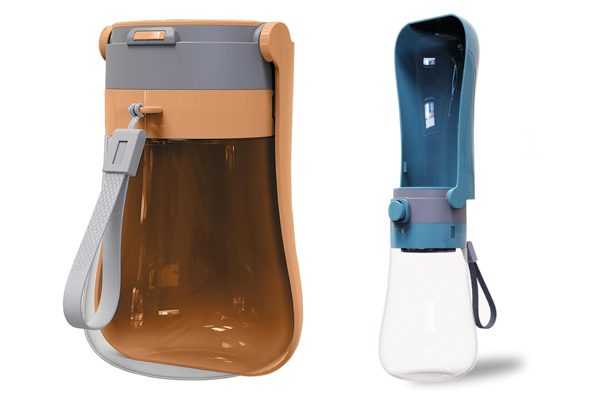
Travel water bottle
Keep your dog hydrated on walks. Practical, leak-proof and always close at hand.
Discover the product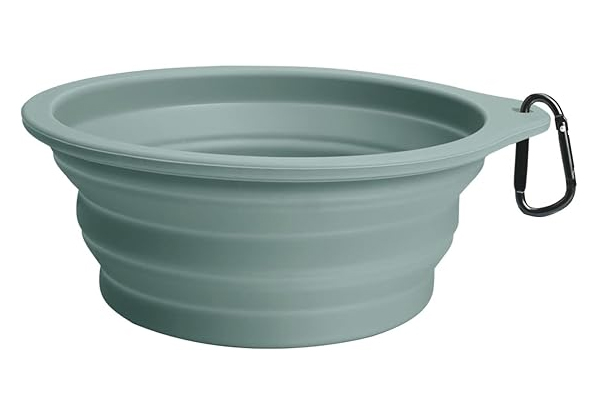
Foldable bowl
Folds in seconds and fits in a bag. Perfect for meal breaks while travelling.
Discover the product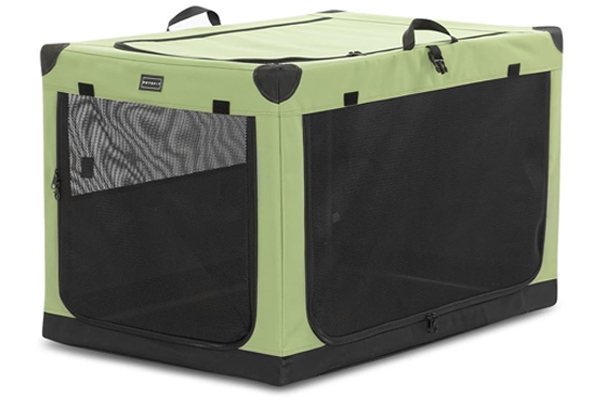
Travel crate
Travel safely by car with a comfortable, secure space for your dog.
Discover the product
Dog carrier bag
A practical way to carry your dog where carriers are required, such as on public transport or during visits.
Discover the product Follow us!